
Why Your Butt Hurts After Sitting All Day
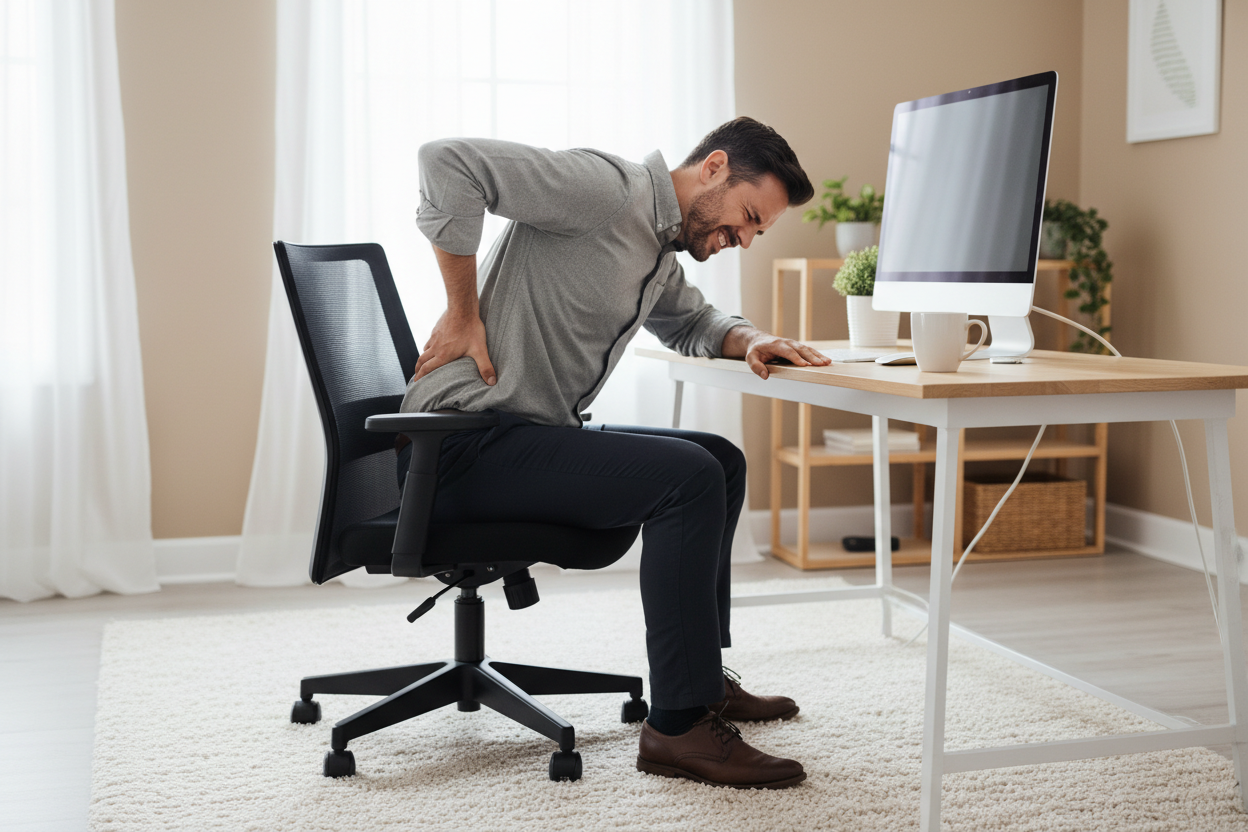
 Most people blame back pain on a bad chair — but discomfort often starts lower. The seat pan is where your body makes the most contact with the chair, and poor seat design leads to pressure points, numbness, and fatigue within hours.
If you've ever stood up from your desk feeling like you've been sitting on concrete, your chair's seat is likely the culprit.
What Makes an Office Chair Comfortable for Your Butt?
1. Seat Foam Density & Thickness
- High-density foam holds its shape over time and distributes weight evenly
- Cheap chairs use low-density foam that compresses flat within months
- Look for 3"–4" of foam thickness for all-day comfort
2. Seat Width
- Standard seats are 17"–19" wide — fine for average builds
- Big & Tall users need 20"+ to avoid hip pressure on the armrests
- Too narrow = pressure on outer thighs; too wide = poor lumbar alignment
3. Seat Depth
- Ideal depth: 16"–18" with 2"–4" clearance behind the knees
- Adjustable seat depth is a major plus for shared workstations
4. Seat Edge Design
- Waterfall edge (curved front) reduces pressure under the thighs
- Flat or hard edges cut off circulation — a common cause of leg numbness
5. Seat Tilt & Recline
- A slight forward tilt reduces tailbone pressure
- Synchro-tilt mechanisms let the seat and back move together naturally
Quick Seat Comfort Checklist
| Feature | What to Look For |
|---|---|
| Foam density | High-density, slow-rebound |
| Seat width | ≥20" for larger users |
| Seat depth | Adjustable, 16"–18" |
| Edge design | Waterfall/curved front |
| Tilt mechanism | Synchro-tilt preferred |
Our Pick: COMHOMA CH510 — Built for All-Day Seat Comfort
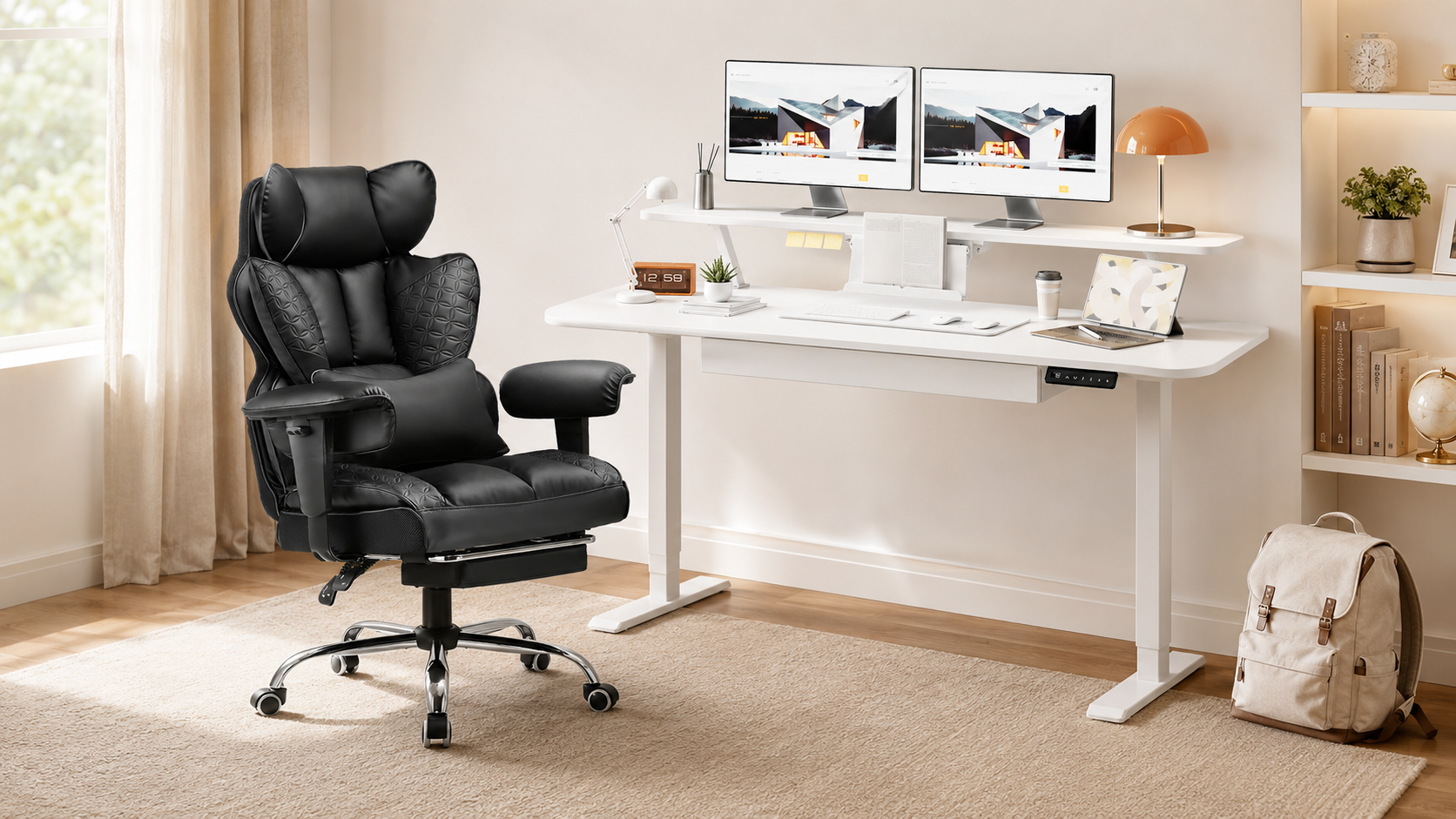
If you need a chair that checks every box above, the COMHOMA CH510 Big and Tall Office Chair is our top recommendation.
Why the CH510 works for butt comfort:
- 400 LBS weight capacity with a reinforced wide seat pan — no more feeling squeezed
- Thick high-density foam cushion that maintains shape through long work sessions
- Adjustable lumbar pillow included — supports the lower back so weight distributes evenly across the seat
- Adjustable armrests keep shoulders relaxed, reducing the tendency to shift and fidget
- Smooth recline with tilt tension control for personalized sitting angles

5 FAQs: Office Chair Butt Comfort
Q1: Why does my butt go numb sitting in an office chair? Numbness is usually caused by pressure on the sciatic nerve or restricted blood flow. A seat that's too hard, too narrow, or has a sharp front edge compresses the underside of your thighs. Look for a chair with a waterfall seat edge and high-density foam.
Q2: How thick should office chair seat foam be? For all-day comfort, aim for at least 3 inches of high-density foam. Chairs with thin or low-quality foam compress quickly and lose their cushioning within months of regular use.
Q3: Is a wider seat always better? Not necessarily. The seat should be about 1"–2" wider than your hips on each side. Too wide and you lose lumbar support alignment; too narrow and you get hip pressure. For larger users (200 lbs+), a 20"+ seat width is generally recommended.
Q4: Can a seat cushion fix a bad office chair? A quality memory foam seat cushion can help short-term, but it won't fix poor seat depth, bad tilt mechanics, or a broken foam base. If your chair is causing consistent discomfort, upgrading is more cost-effective long-term.
Q5: How often should I replace my office chair for seat comfort? Most office chair foam degrades noticeably after 5–7 years of daily use. If your seat feels significantly flatter than when you bought it, or you're experiencing new discomfort, it's time to consider a replacement.
Final Thoughts
Seat comfort isn't a luxury — it's a productivity essential. The right seat width, foam density, and edge design can eliminate hours of daily discomfort. If you're ready to upgrade, the COMHOMA CH510

Share:
Family Summer Fun: Enjoy Homemade Frozen Drinks & Slushies with COMHOMA RapidChill Machine
Back-to-School Furniture Guide 2026: Build a Better Study Space at Home